What to Fix Your Own Baby Dolls Things You Need
ABOUT
About Small Great Things
It's Kennedy's journey of coming to terms with her own racist relatives and white privilege, as she realizes, for the first time, the pervasiveness of American racism, that is the real story here…
—Kirkus Reviews
The publisher: Ballantine Books, publication date: October 11, 2016
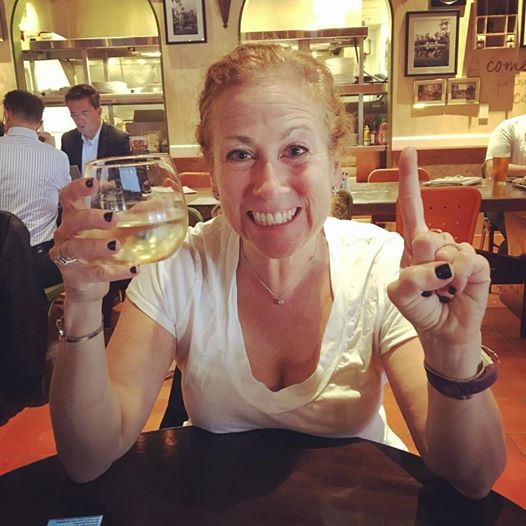
This is the deliriously happy face of a #1 NYT bestseller!!
AUTHORS NOTE
Stream SMALL GREAT THINGS by Jodi Picoult --Author's Note by PRH Audio from desktop or your mobile device on SOUNDCLOUD
About four years into my writing career, I wanted to write a book about racism in the US. I was drawn by a real-life event in NYC, when a Black undercover police officer was shot in the back, multiple times, by white colleagues – in spite of the fact that the undercover cop had been wearing what was called "the color of the day" – a wristband meant to allow officers to identify those who were in hiding. I started the novel, foundered, and quit. I couldn't do justice to the topic, somehow. I didn't know what it was like to grow up Black in this country, and I was having trouble creating a fictional character that rang true.
Flash forward twenty years. Once again, I desperately wanted to write about racism. I was uncomfortably aware that when white authors talked about racism in fiction, it was usually historical. And again, what right did I have to write about an experience I had not lived? Then again, if I'd only written what I knew, my career would have been short and boring. I grew up white and class-privileged. For years I had done my homework and my research, using extensive personal interviews to channel the voices of people I was not: men, teenagers, suicidal people, abused wives, rape victims. What led me to write those stories was my outrage and my desire to give those narratives air time, so that those who hadn't experienced them became more aware. Why was writing about a person of color any different?
Because race is different. Racism is different. It's fraught, and it's hard to discuss, and so as a result we often don't.
Then I read a news story about an African-American nurse in Flint, MI. She had worked in labor and delivery for over twenty years, and then one day a baby's dad asked to see her supervisor. He requested that this nurse, and those who look like her, not touch his infant. He turned out to be a White Supremacist. The supervisor put the patient request in the file, and a bunch of African-American personnel sued for discrimination and won. But it got me thinking, and I began to weave a story.
I knew that I wanted to write from the point of view of a Black nurse, a skinhead father, and a public defender – a woman who, like me, and like many of my readers, was a well-intentioned white lady who would never consider herself to be a racist. Suddenly I knew that I could, and would, finish this novel. Unlike my first aborted foray, I wasn't writing it to tell people of color what their own lives were like. I was writing to my own community – white people – who can very easily point to a Neo-Nazi skinhead and say he's a racist…but who can't recognize racism in themselves.
Truth be told, I might as well have been describing myself not so long ago. I am often told by readers how much they've learned from my books – but when I write a novel, I learn a lot as well. This time, though, I was learning about myself. I was exploring my past, my upbringing, my biases, and I was discovering that I was not as blameless and progressive as I had imagined.
Most of us think the word "racism" is synonymous with the word "prejudice." But racism is more than just discrimination based on skin color. It's also about who has institutional power. Just as racism creates disadvantages for people of color that make success harder to achieve, it also gives advantages to white people that make success easier to achieve. It's hard to see those advantages, much less own up to them. And that, I realized, was why I had to write this book. When it comes to social justice, the role of the white ally is not to be a savior or a fixer. Instead, the role of the ally is to find other white people and to talk to make them see that many of the benefits they've enjoyed in life are a direct result of the fact that someone else did not have the same benefits.
I began my research by sitting down with women of color. Although I knew that peppering people of color with questions is not the best way to educate oneself, I hoped to invite these women into a process, and in return they gave me a gift: they shared their experiences about what it really feels like to be Black. I remain so grateful to these women – not just for tolerating my ignorance, but for being willing to teach me. Then I had the pleasure of talking to Beverly Daniel Tatum, former president of Spelman College and a renowned racial educator. I read books by Dr. Tatum, Debby Irving, Michelle Alexander, and David Shipler. I enrolled in a social justice workshop called Undoing Racism, and left in tears every night, as I began to peel back the veneer of who I thought I was from who I truly am.
Then I met with two former skinheads, to develop a vocabulary of hate for my White Supremacist character. My daughter Sammy was the one who found Tim Zaal – a former skinhead who had Skyped with her class in high school. Years ago, Tim beat up and left a gay man for dead. After getting out of the Movement, he started to work at the Simon Weisenthal Center talking about hate crimes and realized one day that the man he had left for dead worked there too. There were apologies and forgiveness, and now, they are friends who talk about their unique experience to groups every week. He also is happily married, now, to a Jewish woman. Frankie Meeink, another former skinhead, works with the Anti-Defamation League. After recruiting for hate crews in Philly, he now runs Harmony through Hockey – a program to promote racial diversity among kids.
These men taught me that the White Power groups believe in the separation of the races and think they are soldiers in a racial holy war. They explained how recruiters for hate groups would target kids who are bullied, marginalized, or who come from abusive homes. They'd distribute anti-white flyers into a white neighborhood and see who responded by saying that the whites were under attack. Then they'd approach those folks and say You're not alone. The point was to redirect the recruit's rage into racism. Violence became a release, a mandate. They also taught me that now, most skinhead groups are not crews seeking out violence, but rather individuals who are networking underground. Nowadays, White Supremacists dress like ordinary folks. They blend in, which is a whole different kind of terror.
When it came time to title this book, I found myself struggling again. Many of you who are long-time fans of mine know this was not the original name of the novel. SMALL GREAT THINGS is a reference to a quote often attributed to Reverend Dr. Martin Luther King, Jr.: "If I cannot do great things, I can do small things that are great." But as a white woman, did I have the right to paraphrase these sentiments? Many in the African-American community are sensitive to white people using Martin Luther King, Jr.'s words to reflect their own experience, and with good reason. However, I also knew that both Ruth and Kennedy have moments in this novel where they do a small thing that has great and lasting repercussions for others. Plus, for many whites who are just beginning to travel the path of racial self-awareness, Dr. King's words are often the first step of the journey. His eloquence about a subject most of us feel inadequate putting into words is inspiring and humbling. Moreover, although individual changes cannot completely eradicate racism -- there are systems and institutions that need to be overhauled as well – it is through small acts that racism is both perpetuated and partially dismantled. For all of these reasons – and because I hope it will encourage people to learn more about Dr. King -- I chose this title.
Of all my novels, this book will stand out for me because of the sea change it inspired in the way I think about myself, and because it made me aware of the distance I have yet to go when it comes to racial awareness. In America, we like to think that the reason we have had success is because we worked hard or we were smart. Admitting that racism has played a part in our success means admitting that the American dream isn't quite so accessible to all. A social justice educator named Peggy McIntosh has pointed out some of these advantages: having access to jobs and housing, for example. Walking into a random hair salon and finding someone who can cut your hair. Buying dolls, toys, and children's books that feature people of your race. Getting a promotion without someone suspecting that it was due to your skin color. Asking to speak to someone in charge, and being directed to someone of your race.
When I was researching this book I asked white mothers how often they talked about racism with their children. Some said occasionally; some admitted they never discussed it. When I asked the same question of Black mothers, they all said, Every day.
I've come to see that ignorance is a privilege, too.
So what have I learned that is helpful? Well, if you are white, like I am, you can't get rid of the privilege you have, but you can use it for good. Don't say "I don't even notice race!" like it's a good thing. Instead, recognize that differences between people make it harder for some to cross a finish line, and create fair paths to success for everyone that accommodates those differences. Educate yourself. If you think someone's voice is being ignored, tell others to listen. If your friend makes a racist joke, call him out on it, instead of just going along with it. If the two former skinheads I met can have such a complete change of heart, I feel confident that ordinary people can, too.
I expect pushback from this book. I will have people of color challenging me for choosing a topic that doesn't belong to me. I will have white people challenging me for calling them out on their racism. Believe me, I didn't write this novel because I thought it would be fun or easy. I wrote it because I believed it was the right thing to do, and because the things that make us most uncomfortable are the things that teach us what we all need to know. As Roxana Robinson said, "A writer is like a tuning fork: we respond when we're struck by something…If we're lucky we'll transmit a strong pure note, one that isn't ours, but which passes through us." To the Black people reading SMALL GREAT THINGS – I hope I listened well enough to those in your community who opened their hearts to me to be able to represent your experiences with accuracy. And to the white people reading SMALL GREAT THINGS – we are all works in progress. Personally, I don't have the answers and I am still evolving daily.
There is a fire raging and we have two choices: we can turn our backs, or we can try to fight it. Yes, talking about racism is hard to do, and yes, we stumble over the words—but we who are white need to have this discussion amongst ourselves. Because then, even more of us will overhear and then, I hope, the conversation will spread.
I've read Small Great Things, and I want to DO something. HELP?!
I am not a social justice educator, so I can offer advice only as someone who is still a work in progress. The first thing I can tell you is what NOT to do:
- Don't say you're colorblind. That ignores the impact racism has had on others.
- Don't say "Well, I'm gay/Jewish/female..I'm a minority too!" Again, this robs people of color of THEIR narratives.
- Don't say "I have Black friends!" It assumes that one person represents the whole of the race. And FYI, if you don't sit down and talk about racism with that Black friend of yours, you aren't a true friend.
- Don't assume you need to be present at all conversations about race. It's okay to be excluded and to yield the floor and the microphone to leaders within the Black community.
- Don't be a savior. Your job is not to come into a community to "fix" it. Your job is to say, "Do you need help? If so, what would you like me to do?"
- Don't say "All Lives Matter!" Yes, of course all lives matter. But it's like going to the doctor with a broken arm – and he says, "All bones matter!" True, but right at that moment you need the BROKEN one fixed. All lives CAN'T matter until the one type that is being threatened daily is no longer a pressing problem. For this reason, Black Lives Matter.
What you SHOULD do:
- Know the difference between equal and equitable. Equal means THE SAME. Equitable means FAIR. If you had a blind student in your classroom would you give her a written test? No, you'd give a Braille one with the same material on it. Likewise it is important to realize that because people of color may be at a disadvantage (be in in health care, jobs, education) it is necessary to level the playing field, to make success fair and possible for all.
- Educate yourself. It's not the job of people of color to teach you their history. Sure, you know Martin Luther King Jr, and Rosa Parks. Do you know who Henry Ossian Flipper is? Lewis Latimer?
- Feel uneasy. Put yourself into a position where you are not the majority in the room. You may feel uncomfortable – but then again, comfort is a privilege, not a right. And people of color often don't feel comfortable.
- Notice your tailwinds. Challenge your uncle when he tells a racist joke at Thanksgiving. If you're at a meeting and notice white men are doing most of the talking, suggest that you hear from someone who's voice hasn't been heard yet.
- Talk to those who look like you. One advantage to being white is having access to places that are primarily full of white people. Talk about race there, even if there aren't people of color around. Get people to recognize and understand their privilege.
-
Read authors of color »
A really easy way to start to challenge implicit racism is to look at your bookshelf. Who are you reading? For every white author, make sure you choose an author of color to read next: Colson Whitehead, Octavia Butler, Celeste Ng, Nicola Yoon, Jesmyn Ward, Toni Morrison, Jacqueline Woodson, Ta-Nehesi Coates, Nnedi Okurafor, Jason Reynolds, Nic Stone, Walter Mosley, Zadie Smith, Roxane Gay, Christina Henriquez, Jhumpa Lahiri, Amy Tan, Junot Diaz, Sabaa Tahir, Issa Rae, Tracy K Smith, Chimamanda Ngozi Adiche, Edwidge Danticat, Lisa See, Sherman Alexie, Ellen Oh, Sandra Cisneros…shall I go on??
A really great little mnemonic device is one I stole from Kayla Reed, a Black activist on Twitter: ALLY: A (lways center the impacted), L(isten and learn from those who live in the oppression, L(everage your privilege), Y(ield the floor).
Finally, if you have time or money, consider donating to a group like Black Lives Matter, Showing Up For Racial Justice, Race Forward, or a local community group that promotes racial justice.
Q + A
Small Great Things questions, answers & interviews
Some books leave you thinking. This one gets you talking.
Book club discussion questions
- The title alludes to a quote attributed often to Reverend Dr. Martin Luther King, Jr.: "If I cannot do great things, I can do small things that are great." In what ways do the actions of each of the narrators support this statement?
- Do you think legal action would have been brought against Ruth if she were white? How far back in the story do you need to go to consider this outcome?
- Turk's ideology targets black people, people of Jewish heritage, and queer people.* With that in mind, consider the below three questions:
-
- Do you think legal action would have been brought against Ruth if she was of Eastern European Jewish heritage?
- Do you think legal action would have been brought against Ruth if her sexual orientation were other than heterosexual?
- What are the similarities and differences between these three identities in terms of navigating hate groups? Everyday life in America?
- Of the three main characters, Ruth, Kennedy, and Turk, who do you most relate to? Why?
- Were there moments in each of the three characters' stories that you could relate to and/or feel compassion for?
- How do each of the below systems contribute to Ruth's sense of place as a Black woman in America?
-
- Transportation
- Education
- Health care
- Housing
- Lending
- Food supply
- Human Resources
- Policing
- Judicial
- Media
- White people have a historical habit of 'helping' and 'fixing' people whom they deem 'other' and inferior. This damaging pattern even has a name: "White Savior Syndrome." The ultimate, and deadly, irony is that it serves mostly to reinforce ideas about white superiority and white goodness. Can you give three historical examples of this? Can you find three moments in this story where Kennedy falls into that inherited behavioral pattern?
- What do you think Kennedy learns in this story about the ways being white has shielded her from racial discrimination? Did you feel she was open to learning? If yes, how did she demonstrate that? If no, how did she demonstrate that?
- Can white nationalists such as Turk and Brittney perpetuate racism? How?
- Can people such as the hospital lawyer, the judge, Kennedy, or the police perpetuate racism? How?
- We see Kennedy wrestling with her own inner bias and racial conditioning. (add some examples here) Are you in touch with your inner bias and racial conditioning? Can you list five moments over the course of your life when you were taught – through language or silence – what to think and feel about race in America?
- How often to you speak about racism with your closest friends and family?
-
- daily
- weekly
- monthly
- twice a year
- less than once a year
- What do you think the impact is on a person who engages infrequently in conversations about a given topic? What about frequently? How does this differential play out when it comes to racism?
Social justice questions for book clubs —from Debby Irving's Waking Up White:
A note from Jodi: For book clubs interested in exploring racism, I highly recommend reading Debby Irving's WAKING UP WHITE and having a discussion in conjunction with SMALL GREAT THINGS.
- What stereotypes about people of another race do you remember hearing and believing as a child? Were you ever encouraged to question stereotypes? (WUW p. 6)
- How have you understood racial difference? In terms of biology? Culture? Have you given it much thought? Why or why not? (WUW p. 41)
- Think of a time you grossly misinterpreted a person (of any race) or situation. What information was missing that allowed you to draw the incorrect conclusion? What in your belief system contributed to your misinterpretation? (WUW p 68)
- What have you filed away? Create a column that contains these labels: African Americans, Asian Americans, Jews, Latinos, Muslims, Whites. Next to each, quickly write at least five stereotypes that come to mind for each. Do not pause, censor, or correct — rather, let emerge what will. Now look at what you've written. Does it surprise you? If you are white, do you have any stereotypes for whites? Why do you think this is? (WUW p. 91)
- Have you tried to form relationships across racial lines? How have they worked out? If they didn't get very far, how did you explain that to yourself? (WUW, p. 123)
PRAISE
Praise for Small Great Things
Given that Picoult is wrestling with the subject of white privilege, writing Ruth's story in the first person might seem like an exercise of that very prerogative. Can Ruth be the hero of her own story? Or must she be saved by Kennedy? Turns out, this is Picoult's driving concern, too. That "Small Great Things" embraces this question with empathy, hope and humility is no small feat.
There are times it's hard to read because of the window it opens into our 2016 world, but it's even harder to put down. Picoult has outdone herself with "Small Great Things."
A novel that puts its finger on the very pulse of the nation we live in today...A fantastic read from beginning to end, as can always be expected from Picoult, this novel maintains a steady, page turning pace that make it hard for readers to put down. It also allows for conversations to be had and for people to sit back and look at their life, actions (past and present) and wonder how they will move forward. This is a fantastic book not only because it addresses something that happens in America and around the world every day, but it also shows us that change is possible too.
Small Great Things challenges readers, particularly those who carry privilege in the color of their skin, to look at the world in a different way. Picoult succeeds in using her platform to create thoughtful conversations within a country that is continuously struggling with race.
An Amazon Best Book of October 2016: Jodi Picoult's Small Great Things is about racism, choice, fear, and hope. The novel is based on the true story of a labor and delivery nurse who was prohibited from caring for a newborn because the father requested that no African-American nurses tend to his baby. In the fictional version, Ruth, the African-American nurse in question, finds herself on trial for events related to the same request made by a white supremacist father. Using the narratives of Ruth, the baby's father, and the female public defender who takes Ruth's case, Picoult examines multiple facets of racism. The topic of race in America is difficult to talk about, but in in an honest and revealing way Picoult allows readers to draw their own conclusions about how we see ourselves and others in the world. Small Great Things is an important and thought-provoking novel about power and prejudice that deserves to be read, digested, and shared with others.
Small Great Things, Jodi Picoult's 24th novel, is the remarkable story of an African-American nurse, a white supremacist couple, and one infant whose fate pits them against each other. But it's so much more: an insightful exploration of the overburdened American justice system, a potent meditation on race, and a dramatic tour de force. The New York Times bestselling author is a supremely gifted storyteller whose characters are never less than unforgettable.
It's Jodi Picoult, the prime provider of literary soul food. This riveting drama is sure to be supremely satisfying and a bravely thought-provoking tale on the dangers of prejudice.
Famous for her 'ripped from the headlines' fiction, Picoult grabs the third rail of American life - race - in her most ambitious novel ever. The combo of a black nurse, a white baby, his white supremacist parents and a murder trial may leave us uncomfortable, but it's guaranteed to make us think.
A compelling, can't-put-it-down drama with a trademark Picoult twist.
Picoult's stories are always interesting — they're well-written, fast-paced, multi-faceted and current. Small Great Things is no different. It will leave you with lots to think about, more knowledge than you had before and a deeper understanding of America today.
Was so honored to be a part of this. Both books are moving, gorgeous, mind blowing, and perfect. Xo
Picoult's gripping tale is told from three points of view, that of Ruth, Kennedy and Turk, and offers a thought-provoking examination of racism in America today, both overt and subtle. Her many readers will find much to discuss in the pages of this topical, moving book.
Jodi Picoult is never afraid to take on hot topics, and in SMALL GREAT THINGS, she tackles race and discrimination in a way that will grab hold of you and refuse to let you go…this page-turner is perfect for book clubs.
Jodi Picoult has dealt with weighty issues such as teenagers with leukemia in My Sister's Keeper and child sexual abuse in Perfect Match. Now, in her latest novel, she's covering another pressing topic: racism in the United States
Critical acclaim for Jodi
Picoult writes with unassuming brilliance.
It's hard to exaggerate how well Picoult writes.
Picoult is a master of the craft of storytelling.
…her storytelling skills are most evident.
TOUR
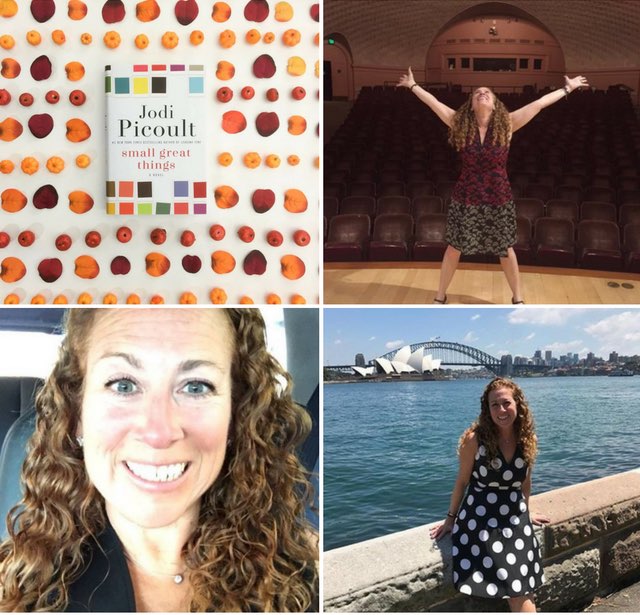
A huge THANK YOU to all of my Australian, US, UK, and Canadian fans who come out to my Small Great Things tour!
xoxo —Jodi
What to Fix Your Own Baby Dolls Things You Need
Source: https://www.jodipicoult.com/small-great-things.html
0 Response to "What to Fix Your Own Baby Dolls Things You Need"
Post a Comment